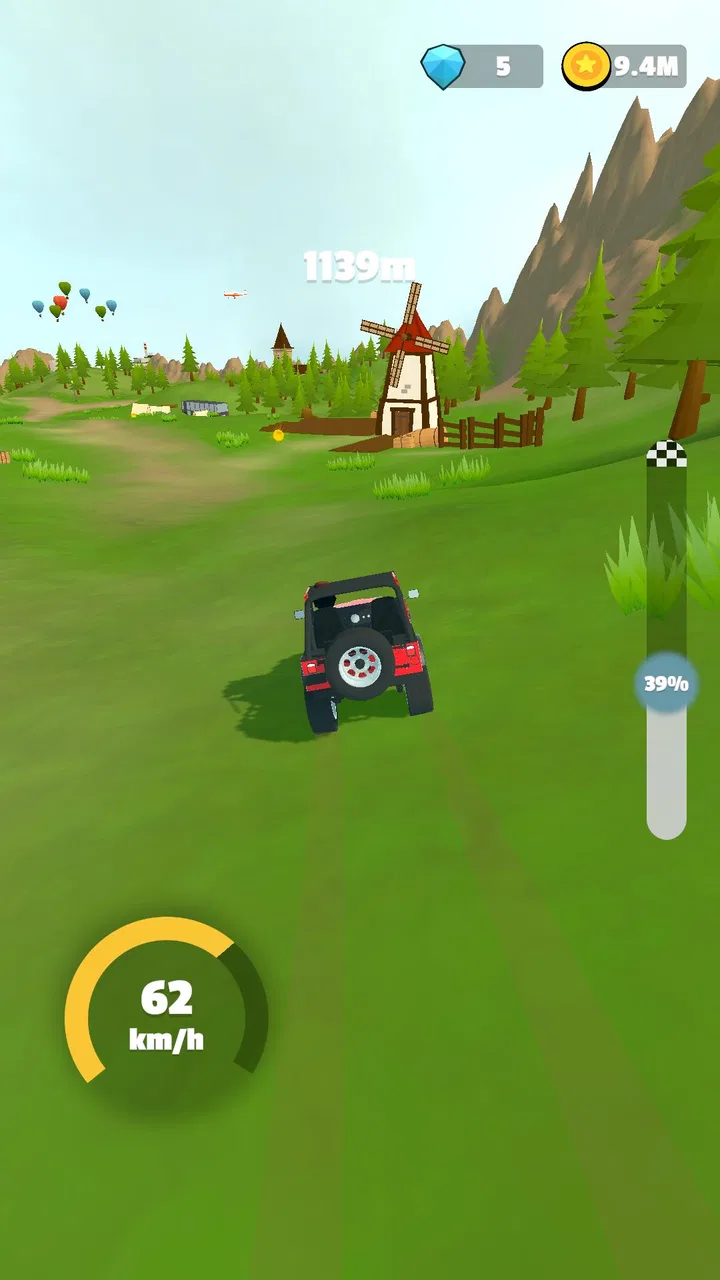
Ride Evolution ― Car Racing 3D
- 4.5
- Rating
- 100.00K
- Installs
- Free
- Price

 Analysis by App-foxy
I approached Ride Evolution – Car Racing 3D expecting a quick racing game built around one clear action: building speed, choosing the right moment, and trying to finish ahead of the other cars. That first impression is accurate, but the upgrade element gives each run a little more purpose than a simple time-killer. I found it easiest to enjoy when I treated every race as a short experiment rather than expecting a full simulation.
This is a free racing game from Freeplay Inc, rated for Everyone. It has reached over one hundred thousand installs and holds a 4.5 average from around four thousand ratings, which suggests that its straightforward format has found an audience. The game is currently at version 1.3.5 and runs on Android 6.0 or later. Those details matter mainly because the experience is aimed at broad accessibility: you do not need a recent flagship phone or prior racing-game knowledge to understand the basic loop.
The central idea is simple. You give your car a slingshot-style boost, improve it over time, and use better timing to handle each track more effectively. I like that the concept is easy to grasp within a few minutes. There is no long tutorial to memorize before the first attempt, and the game’s appeal comes from seeing whether a small improvement in timing or vehicle strength changes the result.
You May Also Like

 Blood Strike: 2.5 Anniversary
Blood Strike’s Loadouts Turn Every Drop Into a Tactical Gamble
A close look at Blood Strike’s custom loadouts: how fast access to signature weapons reshapes its battle royale rhythm, rewards preparation, and narrows the gap between fights.

 Pandora - Music & Podcasts
Pandora’s Music Is Easy to Start, but Harder to Recover
Pandora’s strength is its low-effort path from a seed to a station. Its weak spot is how much confidence it asks you to place in connection, setup, and quiet recovery.

 8 Ball Pool
 Is Built on Rivalries, Rematches, and Routine
A close look at the rivalries, rematches, shared routines, and unanswered safety questions that turn a quick pool match into a persistent mobile community.

 Samsung Music
’s Quiet Strength Is Playing What You Already Own
Its reach comes less from spectacle than from dependable access to a personal library. That simplicity is both the app’s strongest retention engine and its ceiling.

 AccuWeather: Weather Radar
AccuWeather Review: A Quick, Clear Forecast for Everyday Decisions
For everyday plans, the best forecast is the one you can understand quickly. AccuWeather makes rain timing, radar, and local conditions easy to act on, with a few trade-offs.

 Hill Climb Racing
Why Hill Climb Racing Still Turns Crashes Into One More Run
A tiny car, a bumpy hill and one more upgrade: Hill Climb Racing keeps resurfacing because its simple chaos makes every near-miss feel personal.
More From Our News Desk
View All News


Starting smoothly and finding the first win
I’d use the first few races to learn the boost’s rhythm before worrying about upgrades or chasing a perfect finish. Once you can repeat a launch that feels effective, you’ll have a clearer baseline for judging what helps. That makes the next step less guesswork and more about choosing one change at a time.
What the first few minutes feel like
For a first-time player, the most useful expectation is to keep the opening session short and focused. Do not try to understand every possible upgrade immediately. Begin by watching how the boost behaves, how much control you have over its timing, and what happens when you use it too early or too late. The first meaningful success is not necessarily a perfect race; it is learning why one launch feels stronger than another.
I recommend playing the first few attempts with attention on one variable at a time. On one run, concentrate on the beginning of the race. On the next, observe whether saving the boost for a more useful moment produces a better result. This approach makes the game feel less random and helps you build a repeatable habit instead of simply tapping through races.
The slingshot mechanic is the part that separates this from a conventional steering-focused racer. In a typical mobile racing game, I expect to manage corners, braking, or a constant accelerator. Here, the important decision is more concentrated: create momentum at the right time and understand how that momentum affects the rest of the run. That makes it suitable for short breaks, especially when I want a game with an immediate objective rather than a long career mode.
How I would handle the first setup
After installing, I would start with the default car and avoid spending anything until I understood the basic race rhythm. The reason is practical: an early upgrade can make a run feel better, but it can also hide whether the real problem is weak timing. Learning the starting behavior first gives you a clearer sense of what the car actually needs.
Once you have completed a few races, compare the result of a controlled attempt with a rushed one. If the controlled run performs better even without a major improvement to the car, your next priority should be consistency. If the car repeatedly feels unable to keep up despite sensible timing, then an upgrade becomes a more meaningful choice. This is a better way to spend resources than upgrading after every disappointing finish.
The game is free to download and play, but it includes optional purchases ranging from $1.99 to $54.99 per item. I would treat those purchases as a convenience decision, not as part of the starting setup. A new player can learn the core loop without immediately paying, and waiting lets you decide whether the short-race format genuinely fits your habits.
The first successful action is about timing, not speed alone
The most satisfying early breakthrough came from stopping myself from using the boost automatically. A boost is valuable because of when it changes the race, not merely because it exists. If I trigger it without considering the situation, I may gain speed but fail to turn that speed into a useful position. When I wait for a moment that supports the whole run, the same mechanic feels far more effective.
That is the first tip I would give a friend: make your first goal repeatable timing rather than an immediate upgrade. Try to reproduce the same successful launch several times. If you can do that, later improvements become easier to judge. You will know whether a stronger car is helping or whether a better decision is doing most of the work.
A second useful habit is to pause mentally after each race and identify one cause for the result. Was the opening boost mistimed? Did you spend too much attention chasing speed and lose control of the run? Did the car simply seem underpowered? This tiny review takes only a moment, but it prevents the common cycle of repeating the same mistake while hoping the next attempt will somehow fix it.
Where new players can become confused
The word “evolution” may lead some players to expect a deep vehicle-building system, while the actual attraction is more immediate and arcade-like. I would not approach this as a detailed driving simulator. The game is better understood as a compact race-and-upgrade loop in which quick decisions matter more than realistic driving technique.
Another possible confusion is assuming that every loss means the vehicle must be improved. That is not always true. In a game built around a slingshot boost, a badly timed action can make a capable car look weak. Before spending resources, repeat the same section with a different approach. If the outcome changes noticeably, timing is probably the more efficient improvement.
Players may also wonder whether the game is suitable for children because it carries an Everyone content rating. The rating makes it broadly accessible, but adults should still remember that optional in-app purchases are present. If the device is shared with a child, I would check the purchase controls before handing it over. That is less about the racing itself and more about keeping the free-to-start experience within the boundaries you intend.
Using upgrades without turning the game into a grind
My preferred upgrade strategy is to choose a clear purpose for each improvement. If the car struggles to maintain progress after a good launch, improve the area that most directly addresses that weakness. If the car feels strong but the results remain inconsistent, keep practicing instead of assuming that more power will solve the problem.
This creates a useful trade-off. Upgrading early can make the game more forgiving, which is helpful for someone who wants relaxed play. Holding resources back gives a more informative test of your skill and can make progression feel earned. Neither approach is universally right. I would spend sooner if I were playing casually during a commute; I would save longer if I enjoyed optimizing each run.
A third non-obvious tip is to use upgrades as experiments rather than permanent proof that you were playing correctly. Before an upgrade, notice how far a good attempt gets and how often the boost produces a useful advantage. Afterward, look for a specific change. If the race feels exactly the same, the upgrade may not address the real bottleneck, or your timing may still be masking its benefit.
How it fits into an everyday routine
Imagine having five minutes before an appointment. A traditional racing game with long events, extensive menus, and several controls may feel inconvenient. Ride Evolution is more comfortable in that situation because the main decision arrives quickly and a single attempt gives you a clear outcome. I could play one or two races, put the phone away, and return later without needing to reconstruct a complicated strategy.
That same simplicity can be a weakness during a longer session. If you prefer detailed track learning, realistic handling, broad vehicle tuning, or a large competitive structure, the compact format may start to feel repetitive. In that case, a conventional racing alternative with deeper steering and customization would probably be a better match. This game works best when you value quick feedback over extensive simulation.
It is also a reasonable choice for someone who does not usually play racing games. The basic objective is easy to explain, and you can learn through short attempts. I would recommend it to a casual player who likes visible improvement but does not want to study complicated controls. I would skip it for a player whose main enjoyment comes from manual cornering, realistic physics, or long-form progression.
Handling purchases and deciding whether to continue
Because the game is free, I would give it a fair trial before considering any purchase. Play enough to answer three practical questions: do you enjoy the boost timing, do upgrades make your decisions feel more meaningful, and do you still want another race after a poor result? If the answer is no, paying will not change the underlying style of play.
The purchase range is wide, so restraint is sensible. A small optional purchase may feel acceptable to someone who already enjoys the loop, while a larger one is harder to justify unless the game has become a regular part of your routine. I would never buy simply to skip the learning stage. The early mistakes are where you discover how the game works, and removing that stage can make progression less satisfying.
One practical question is whether the game is demanding for older devices. Its minimum operating-system requirement is Android 6.0, and that broad compatibility is encouraging for players using an older phone. Still, the actual comfort of play depends on the device’s condition, screen responsiveness, and available storage. I would close unnecessary apps before a session if the phone is old, not because the game requires advanced hardware, but because timing-based play is less enjoyable when touch response feels inconsistent.
What to do after the first successful run
After your first convincing finish, do not immediately chase the biggest possible result. Repeat the approach and see whether you can reproduce it. Consistency tells you more than a single lucky run. Once the result feels stable, make one upgrade or change one timing decision, then compare the next attempt with the earlier baseline.
This step-by-step method keeps the progression understandable. It also gives the game a little more depth than the store summary suggests, because you begin to build a personal racing routine: observe, test, adjust, and repeat. The loop remains simple, but your decisions become more deliberate.
If you are playing with a friend or showing the game to someone else, explain the boost timing rather than just handing over the phone. New players often press as soon as they see an opportunity, while a short explanation about waiting for a useful moment can make the first session much less frustrating. That is a small teaching advantage for a game intended for quick, accessible play.
My recommendation after spending time with it
Ride Evolution – Car Racing 3D is at its best as a focused arcade racer: easy to start, quick to replay, and centered on the satisfying question of when to use a burst of momentum. Freeplay Inc keeps the main idea approachable, and the Everyone rating makes it a broadly suitable pick for casual players. The 4.5 average and more than one hundred thousand installs also show that the format has connected with a substantial group of users.
I would recommend it to you if you want short races, a simple upgrade path, and a mechanic that rewards better timing without demanding a full simulator’s control scheme. I would be more cautious if you want deep car tuning, realistic handling, or a large variety of driving techniques. Those expectations may lead to disappointment because the game’s appeal is its concentrated loop, not complexity for its own sake.
My final advice is to begin patiently: learn the boost, repeat one successful approach, and upgrade only when you can name the problem the upgrade is meant to solve. That small discipline turns a very simple race game into a more rewarding personal challenge. For a free mobile title that can fit into a short break, that is enough to make it worth trying.
FAQs for Ride Evolution ― Car Racing 3D
01What is Ride Evolution ― Car Racing 3D?
Ride Evolution ― Car Racing 3D is an immersive racing game available for both Android and iOS devices. It offers a thrilling experience with high-quality graphics, customizable cars, and various racing modes. Players can compete against AI or real players in real-time multiplayer races, making it a dynamic choice for racing enthusiasts.
02What features does Ride Evolution offer?
Ride Evolution boasts numerous features including a wide selection of cars, detailed customization options, realistic physics, and multiple game modes like time trials and tournaments. It also includes leaderboards and achievements to track progress and compete with friends, enhancing the competitive aspect of the game.
03Are there in-app purchases in Ride Evolution?
Yes, Ride Evolution includes in-app purchases. Players can buy additional cars, customization items, and speed boosts. While the game is free to download and play, these purchases can enhance gameplay. However, all content can be unlocked through gameplay without spending money, ensuring a fair experience for all users.
04What are the system requirements for Ride Evolution?
For Android users, Ride Evolution requires Android 5.0 and up, while iOS users need iOS 11.0 or later. The game is optimized for both smartphones and tablets, but a device with at least 2GB of RAM is recommended for optimal performance. Ensure you have enough storage space, as the game may require substantial resources.
05Is Ride Evolution suitable for children?
Ride Evolution is rated for players aged 12 and up due to mild violence in the form of car crashes and competitive racing elements. Parents should consider this rating when allowing children to play. The game includes options to disable in-app purchases, providing a safer environment for younger players.
Pros
- Stunning graphics with realistic environments.
- Wide variety of customizable cars.
- Smooth and responsive controls.
- Multiple game modes for diverse gameplay.
- Regular updates with new content.
Cons
- In-app purchases can be costly.
- Requires a stable internet connection.
- Ads may interrupt gameplay.
- Large file size demands ample storage.
- Limited offline features available.

Ride Evolution ― Car Racing 3D
Gallery